


Hey everybody welcome to AI Market Fit.
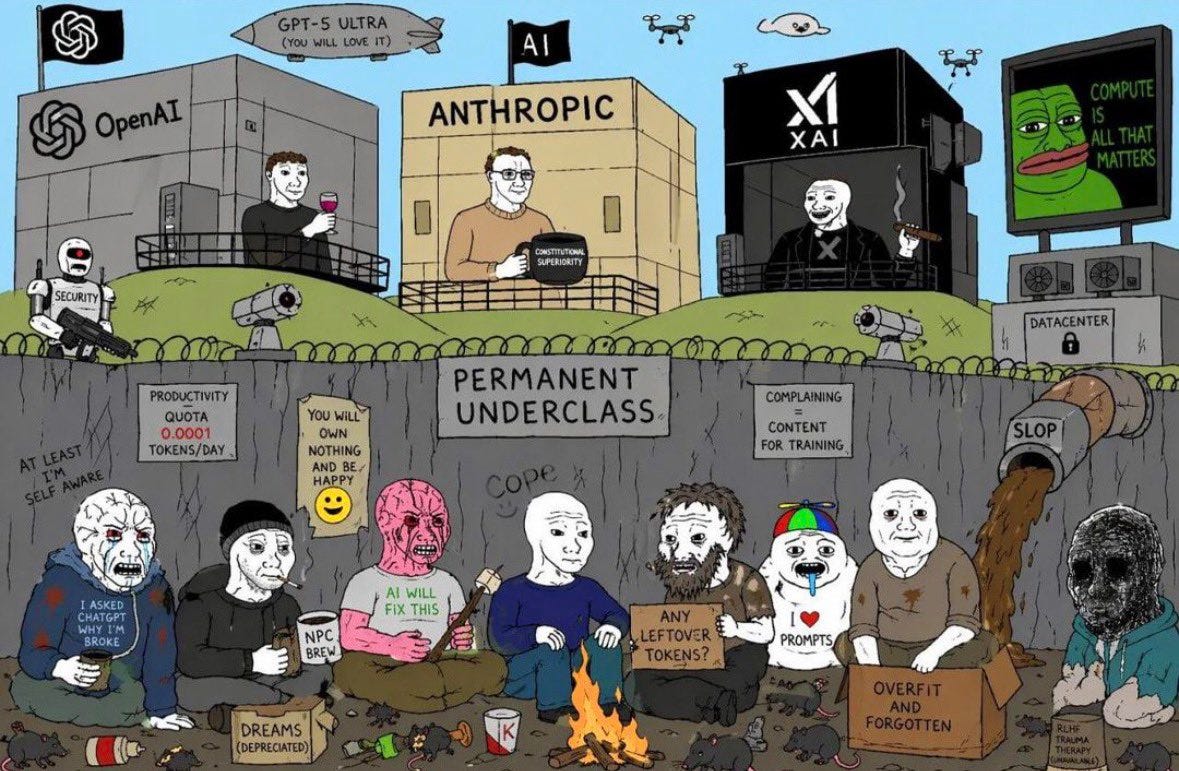
For the last 3/4 years we’ve heard one time after another that AI is going to kill our jobs.
From lawyers to accountants, consultants, level entry jobs, and more, we’ve heard constantly AI will throw them out the window.
1. Dario Amodei, co-founder & CEO of Anthropic
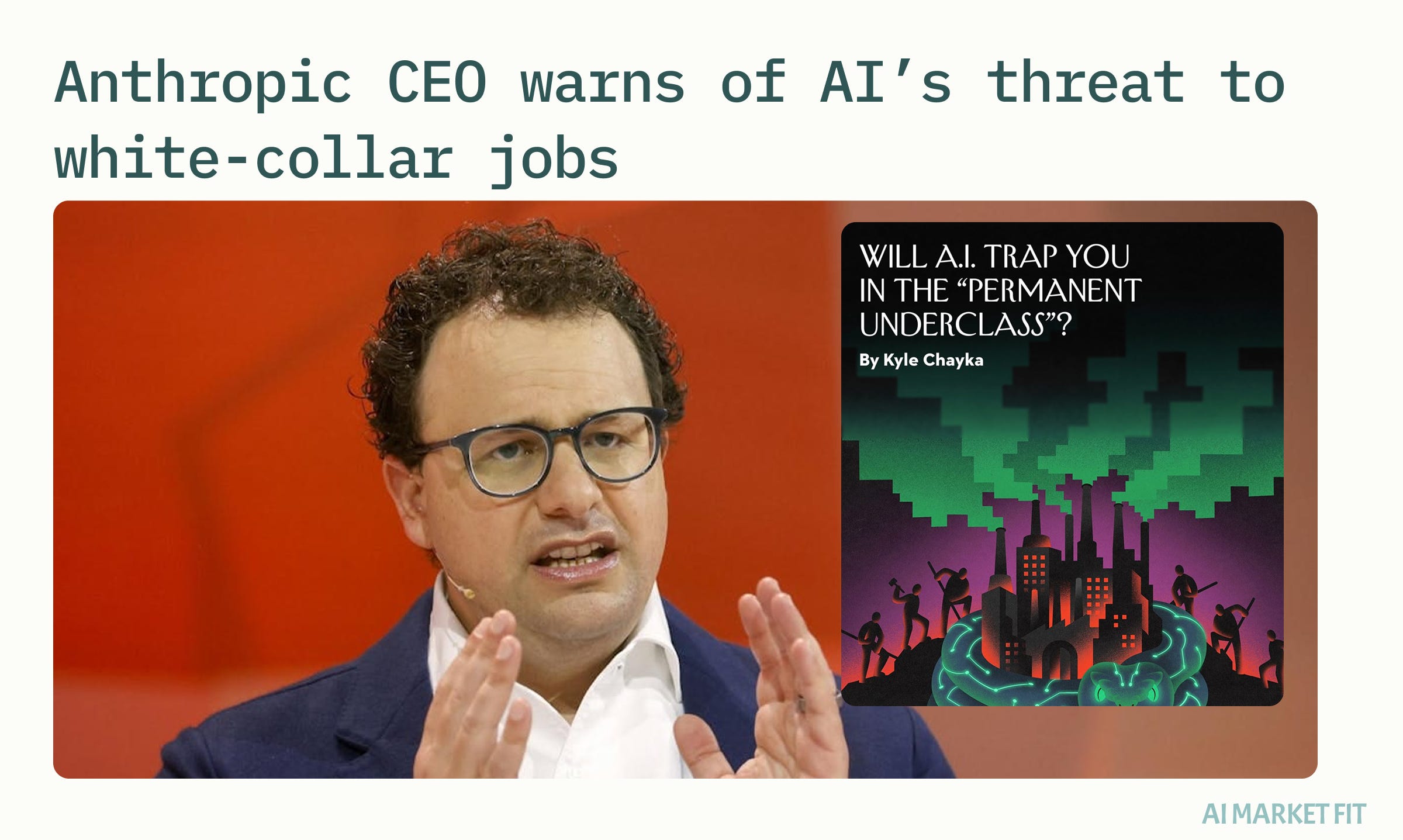
Prediction: AI could wipe out half of entry-level white-collar jobs and push unemployment to 10-20% within 1-5 years.
2. Sam Altman, co-founder & CEO of OpenAI
“Jobs are definitely going to go away, full stop.”
3. Elon Musk, founder of xAI / Tesla / SpaceX
“In a benign scenario, probably none of us will have a job.”
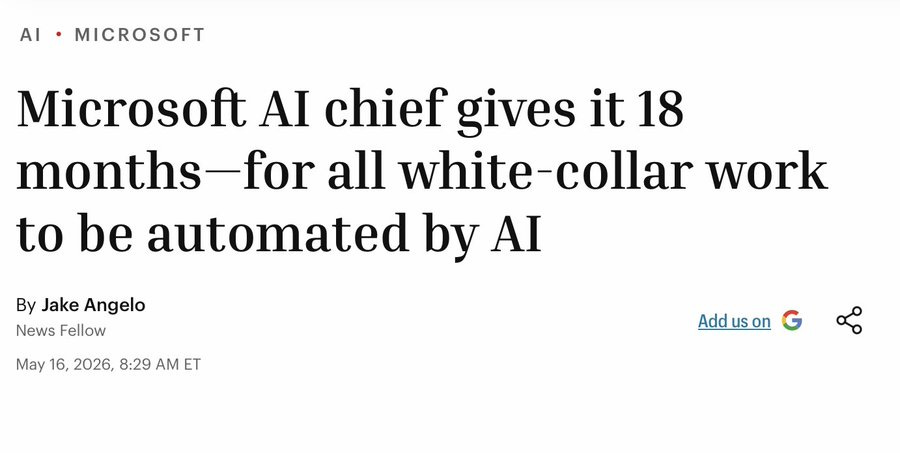
4. Mustafa Suleyman, co-founder of DeepMind, co-founder of Inflection, CEO of Microsoft AI
“Most, if not all, professional tasks” will reach human-level performance.
Jamie Dimon, says people will work less and live longer, but why would people work less?
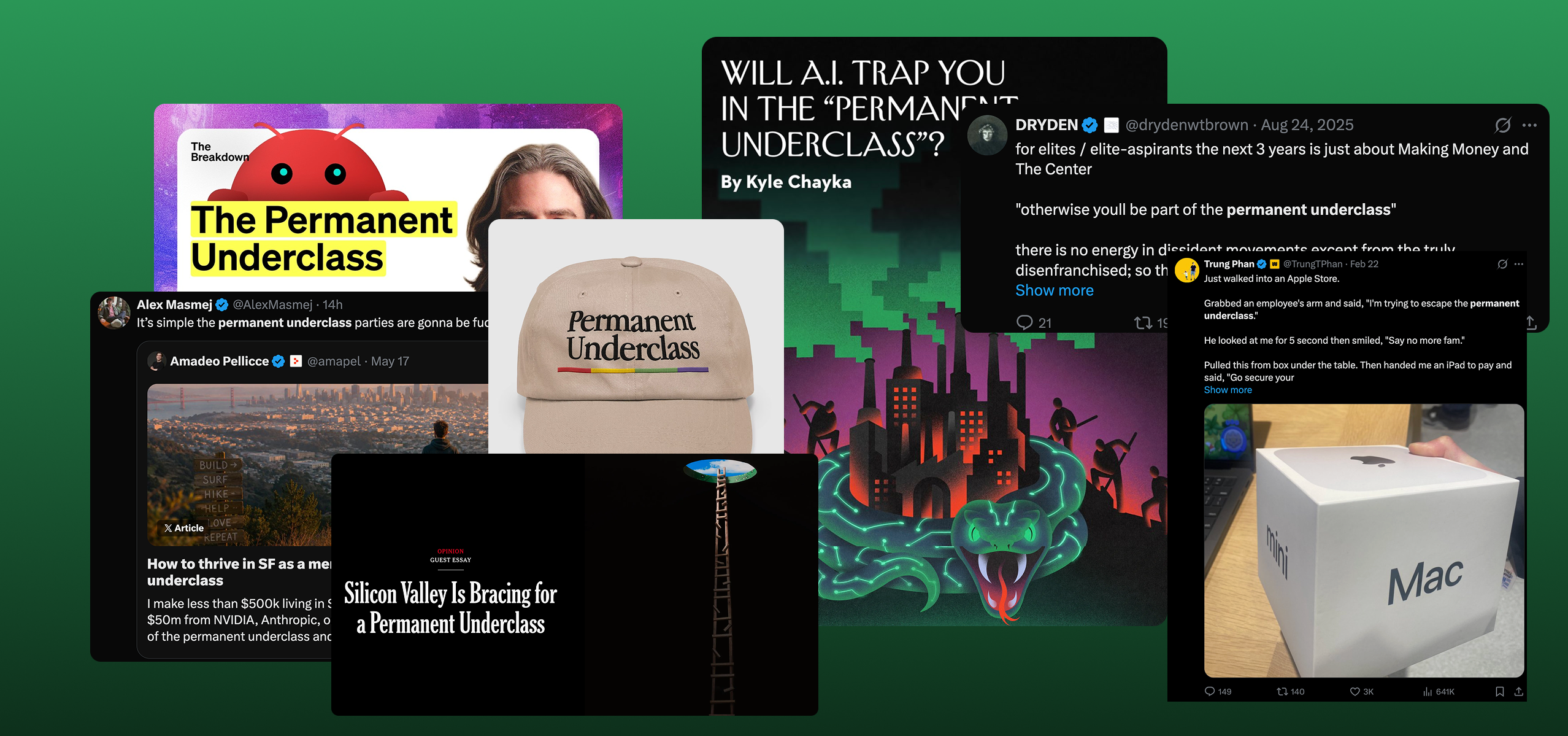
Now, all these predictions have led popular culture to come up with the concept: the Permanent Underclass.
The theory is simple:
“Some even believe that artificial general intelligence, or A.G.I., will create a permanent underclass. In the United States, the term “underclass” gained currency in the 1960s to describe the factory workers left behind by the postwar automation boom.
Today, it has become repopularized as a viral term for a theory that posits that people have a limited window of time to build wealth before A.I. and robotics are advanced enough to fully replace human labor.
At that point, we will get frozen in our current class positions: The rich will be able to deploy superintelligent machines to do their bidding, and everyone else will be rendered useless and unemployable, left to live off welfare scraps”
In a very summarized explanation, this is what the process of the permanent underclass:
AI replaces cognitive labor, not just manual labor.
It can automate many white-collar tasks that used to provide stable middle-class jobs.AI removes the first rung of the career ladder.
If companies hire fewer juniors, young workers may struggle to gain experience and move up.AI concentrates wealth among owners and operators.
The biggest gains may go to people who own capital, companies, data, compute, or distribution.Skills expire faster than people can adapt.
AI may change so quickly that many workers cannot retrain fast enough to stay competitive.Labor-market exclusion compounds over time.
Losing access to stable work can lead to worse income, housing, health, networks, and opportunities.Humans risk becoming non-competitive labor.
In the extreme case, many people remain socially valuable but lose economic value in the market.
Now, this is all theoretical, and there are many reasons why this theory doesn’t make any sense.
As Jensen Huang has said multiple times, when a company becomes more efficient or productive, it doesn’t decide to keep itself small but to hire more people and grow.
Nevertheless, I’ve been playing the scenario in my mind for a while, thinking about how it could be possible to escape the permanent underclass, if such thing existed.
In this newsletter I run you through the systems/strategies I’ve come up to make the most out of this AI Opportunity and avoid getting behind.
For PAID SUBSCRIBERS, Unlock with your free trial or subscribe now!
💭 Remember!
As a AI Opportunity + PMF subscriber you’ll also get access to all the other Claude resources we put together, such as:
4️⃣ 🚨 The Ultimate AI Fundraising Copilot (Built With Claude)
1️⃣2️⃣ How I Rebuilt My SEO Strategy Inside Claude (The Playbook)
We’re already 70,000+ founders and operators inside!
