

The 7 Most Powerful Moats For AI Startups by YC
The full breakdown every AI founder and VC must know by heart and plan accordingly
Hey everybody, welcome back to The AI Opportunity.
For everyone bulding and investing in AI there’s one big question in their mind. How do we avoid getting killed by OpenAI?
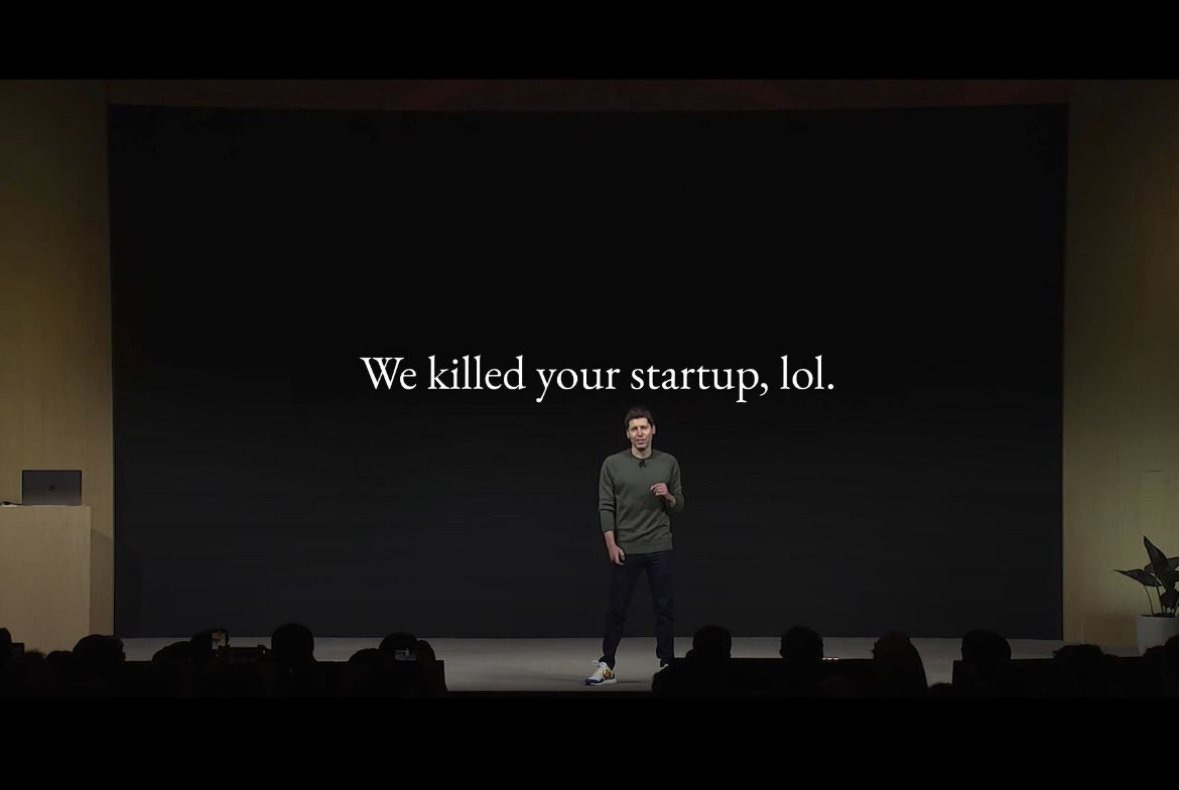
Well, some partners of YC distilled down the 7 most powerful moats for AI startups.
So I thought it would be a good exercise to break them down.
This is a must know for every AI founder and VC out there, so let’s get to it!
0. The moat before all moats: speed
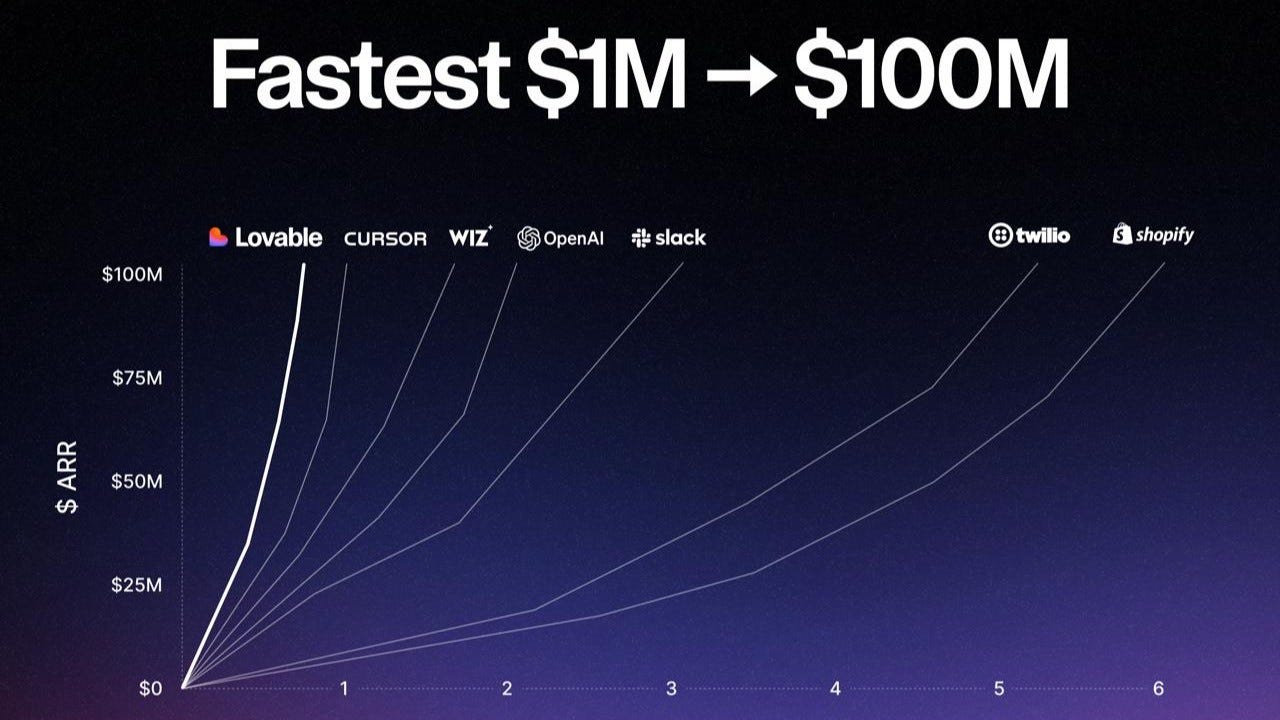
YC’s view is blunt:
At the very beginning, your only moat is speed.
Cursor and Windsor are the canonical examples.
In the early days, Cursor ran one-day sprints. Every single day, the clock reset. Ship, ship, ship.
No big company can move like that. At Google or Anthropic, a feature needs PRDs, reviews, approvals, comms. Weeks or months, not days.
Same story with ChatGPT vs Google:
A tiny team inside OpenAI shipped the first version of ChatGPT in months.
Google had the talent, the research, and a head start with transformers — but also the weight of Search and the ad business. They couldn’t move.
This is the first big YC point:
Don’t reject a startup idea because you can’t see the moat yet.
If you don’t have anything to defend, you don’t need a moat. You need speed and a painful problem.
Find:
A person with a hair-on-fire pain (“I might get fired if this doesn’t get fixed”),
Build something that actually works for them,
Then worry about defense.
Everything below is “1 → 10 → 100 → 1,000” thinking — not “0 → 1” thinking.
The 7 canonical moats — updated for AI
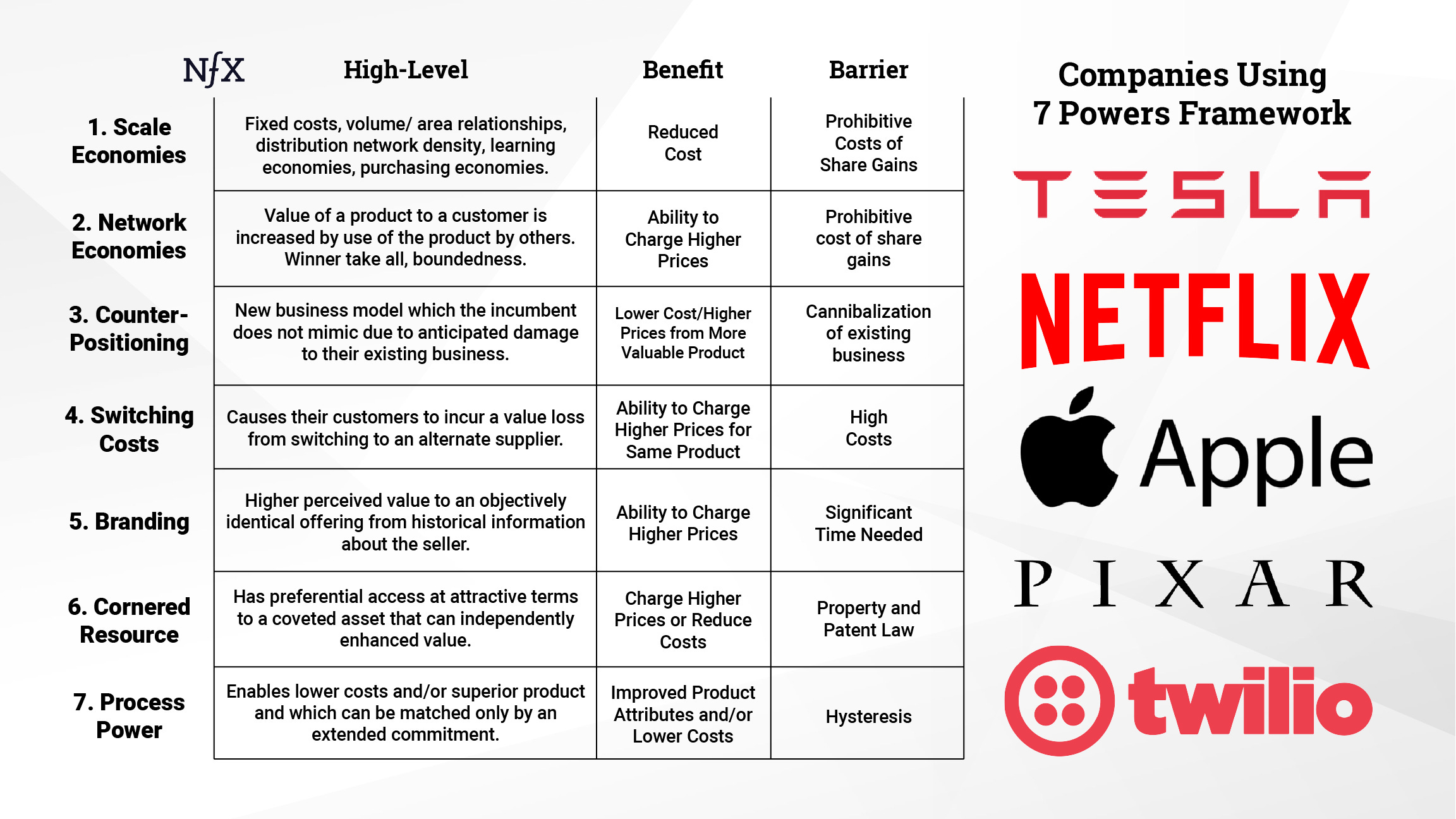
Hamilton Helmer’s book calls them “powers”. For AI, think of them as 7 categories of defensibility you can grow into:
Process power
Cornered resource
Switching costs
Counter-positioning
Brand
Network effects
Scale economies
YC’s update adds an eighth meta-moat: speed, which we just covered.
Let’s go one by one with the AI versions.
1. Process power: when the “boring” work is the moat
Definition (YC / Helmer version):
You’ve built a complex system — product + operations + workflows — that is very hard for others to replicate.
Classic example in the book: Toyota’s production system.
Modern SaaS examples: Stripe, Rippling, Gusto, Plaid.
AI equivalents:
CaseText (legal AI)
Greenlight (KYC for banks)
Casa (AI for loan origination)
Any AI system that, if it fails, costs the customer millions.
On a weekend, a smart student can hack together a demo:
“Look, it underwrites a loan from a PDF!”
That’s not what banks are buying.
What they actually need:
99%+ reliability across thousands of edge cases
Integrations with legacy systems
Auditable decisions, logs, fallbacks
Compliance, risk, monitoring, SLAs
The YC framing:
80% of the product takes 20% of the time.
The last 20% (to reach production-grade) takes 10–100x more effort.
That painful, “unsexy” work is your process power.
In AI:
Building robust evals,
Handling long-tail user behavior,
Designing recovery flows when the model hallucinates,
Instrumentation, logging, monitoring…
All of that is hard to copy from a landing page. That’s the point.
If your product is mission-critical and you’re willing to suffer through the last 10%, you are literally building a moat.
2. Cornered resource: owning something no one else can easily get
Definition:
You have privileged access to something valuable: data, distribution, relationships, IP, regulatory position, or a custom model.
Classic examples:
Pharma: patents + FDA approval
Oil / mining: physical resource rights
AI versions:
Government / defense relationships
Scale AI, Palantir working with the DoD
Years of trust building, security clearances, physical SCIFs
The real asset isn’t just the contract — it’s the mental default inside the institution:
“If we want AI, we call these guys.”
Unique data + tuned models
Character AI fine-tuning models for their use case and driving 10x lower serving costs in their niche.
Enterprise agents sitting in workflows where no generic model sees the data.
Forward-deployed AI engineers
YC’s picture: founders deeply embedded in a workflow that has never had good software. They:Map the real process (emails, phone calls, spreadsheets, workarounds).
Turn it into prompts, evals, and custom datasets.
Eventually build models or chains specialized for that workflow.
That accumulated data + understanding is a cornered resource.
Someone else can build an agent, but they don’t have your:
Correct labels of what “good” looks like in that domain,
Negative examples,
Fine-tuned intuition for edge cases.
Bonus: yes, having your own model is a cornered resource — but YC’s point is:
It’s one type of moat, not the only one.
3. Switching costs: getting “stuck” inside your customer’s nervous system
Definition:
Customers stay because leaving is too painful — financially, operationally, or emotionally.
Classic SaaS examples:
Oracle databases
Salesforce CRM
ATS systems like Lever / Greenhouse / Ashby
Migrating means:
Moving all historic data
Rebuilding workflows
Retraining teams
In the AI era, YC sees two different switching-cost stories.
3.1. Old switching costs are falling
LLMs + agents can:
Read the old system,
Reshape data into a new schema,
Script browser automation to pull data out when export is blocked.
A motivated startup can potentially zero out the old “data migration is impossible” moat.
3.2. New switching costs are rising
AI startups like Happy Robot (I’m angel investor wohoo) and Salient are doing something new:
They run long pilots (6–12 months).
They sit inside the customer, learning every weird detail of the workflow.
They build custom logic + sequences that reflect how that business actually runs.
Once that’s done and the pilot converts into a 7-figure contract:
You’re not just storing data.
You’ve become part of their operating system.
Switching would mean redoing a year of joint work.
Also emerging:
Consumer memory as a switching cost.
If one assistant actually remembers your preferences, history, projects, and style, it slowly becomes more painful to move, even if another model is “better” on benchmarks.
Takeaway:
If you’re in enterprise, deep workflow integration is a moat.
If you’re in consumer, persistent memory and personalization will be one.
4. Counter-positioning: doing what incumbents can’t afford to do
Definition:
You adopt a business model or product approach that your incumbent competitors could technically do, but won’t — because it cannibalizes their core business or breaks their org.
Classic form:
A new entrant charges less or charges differently, in a way that would blow up the incumbent’s P&L.
AI examples YC highlights:
4.1. Per-seat SaaS vs “task-based AI”
Most incumbents (Zendesk, Intercom, etc.) charge per seat.
But:
Good AI agents → fewer seats.
Fewer seats → lower revenue.
So the better their AI gets, the more they shrink their own ARR.
Startups, meanwhile, can price on:
Tasks completed
Tickets resolved
Revenue impacted
New AI companies can say:
“We don’t charge per person. We charge for work done.”
That is literally hard for legacy SaaS to copy without blowing up their revenue model and sales comp structure.
4.2. Second-mover advantage: coming after the “early winner”
YC has seen over and over that second movers win:
Stripe after Authorize.net/Braintree
DoorDash after Grubhub/Postmates
In AI:
Harvey vs. Legora in legal AI
Harvey moved early and leaned heavily into fine-tuning, model work, big-logo sales.
Legora counter-positions on: “We just built a better product and focused on the application layer.”
GigaML vs. Sierra & others in customer support
GigaML’s claim: it just works better, onboards faster, and gets to value more quickly.
Speak vs. Duolingo in language learning
Duolingo optimized for gamification and retention, often at the expense of real language acquisition.
Speak’s counterposition: “We’re where you go if you actually want to speak the language with AI, not just farm points.”
Counter-positioning often pairs with brand (next section):
You don’t just do something different — you own a position in the customer’s mind.
5. Brand: when people pick you even at parity
Definition:
Customers choose you over an equivalent product, purely because of who you are and what you stand for.
Classic example: Coca-Cola vs generics.
AI version:
Google has more users, a stronger historical brand, and models (Gemini Pro / Flash 2.5) that are at least competitive with GPT-4.
And yet: “ChatGPT” is the brand for AI. It’s the verb. It’s the default.
In 2022, if you’d predicted that a small lab would beat Google to owning the consumer AI brand, almost no one would have believed you.
This happened because of:
Counter-positioning (shipping something that threatened Search economics),
Speed (small team, fast ship),
And then compounding brand.
For startups:
You won’t have a brand moat in year 1.
But if you do the other things right and keep a tight narrative (“We’re the X that actually Y”), brand will eventually amplify your other moats.
6. Network effects: usage → data → better product → more usage
Classic definition:
The product becomes more valuable as more people use it.
Old world examples:
Facebook: more friends → more value
Visa: more merchants + more cardholders → more value
AI era version is more about data + eval loops:
Foundation models
Every ChatGPT conversation, rating, correction feeds back into the training signal for the next model.
Cursor
Cursor effectively turns every keystroke, mouse click, and acceptance/rejection of a suggestion into training data for its autocomplete and codegen.
More developers → more signals → better suggestions → more developers.
Enterprise AI agents:
When you deploy into a bank, logistics company, or HVAC rollup and run real workflows, you get:
Private data,
Labels of “good vs bad” completions,
Failure cases that drive your evals.
Those evals are crucial:
“Did this agent actually do the right thing in the real world?”
That feedback loop tightens your product in a way that a competitor without the usage simply can’t match.
Network effects here are not just “more users”. They are:
More high-quality usage → better models + prompts + evals → even more usage.
7. Scale economies: paying the fixed cost so others don’t have to
Definition:
You invest a lot up-front in something big and expensive, so your marginal cost is lower than any new entrant.
Classic examples:
UPS, FedEx, Amazon logistics networks
Power plants, factories, physical infrastructure
AI versions:
Training frontier models
It’s extremely capital-intensive to train GPT-4/5-class models.
Once trained, you can amortize that cost across billions of inferences.
This is one of the labs’ main moats against each other.
AI-native infra companies like Exa
Exa crawls a big chunk of the web, stores it, and exposes it as “search for AI agents” via API.
That crawl + infra is a big fixed investment.
But once it’s built, multiple customers can share that cost.
YC is already seeing new startups (Channel 3, Orange Slice, etc.) following similar patterns: heavy up-front crawl + infra, then thin agents on top.
This moat is rarer at the application layer, but it exists whenever:
You front massive fixed cost (infra, data, compliance, integrations),
And then reuse it for many customers at a marginal cost a new player can’t match.
So… how should you think about moats?
YC’s core message to founders is surprisingly anti-theory:
Don’t use moats to talk yourself out of starting.
If you’re pre-product or pre-customer, you have nothing to defend.
Your job is to find a person with a truly painful problem and make something they can’t live without.
Once you hit real traction, be intentional.
Ask: given our product and market, which 1–2 moats can we reasonably deepen?Are we naturally building process power (complex, high-reliability systems)?
Are we accumulating a cornered resource (data, relationships, domain knowledge, specialized models)?
Are we embedding so deeply we create switching costs?
Are we counter-positioned against incumbents’ pricing or org structure?
Is there a network effect in our usage → data → quality loop?
Are we making heavy fixed investments (scale economies) that new entrants won’t match?
Keep speed as a permanent discipline, not a phase.
It’s not just a “pre-moat” thing.
OpenAI vs Google, Cursor vs big IDEs — speed keeps opening doors that moats then protect.
Cheers,
Guillermo


