Hey everyone!
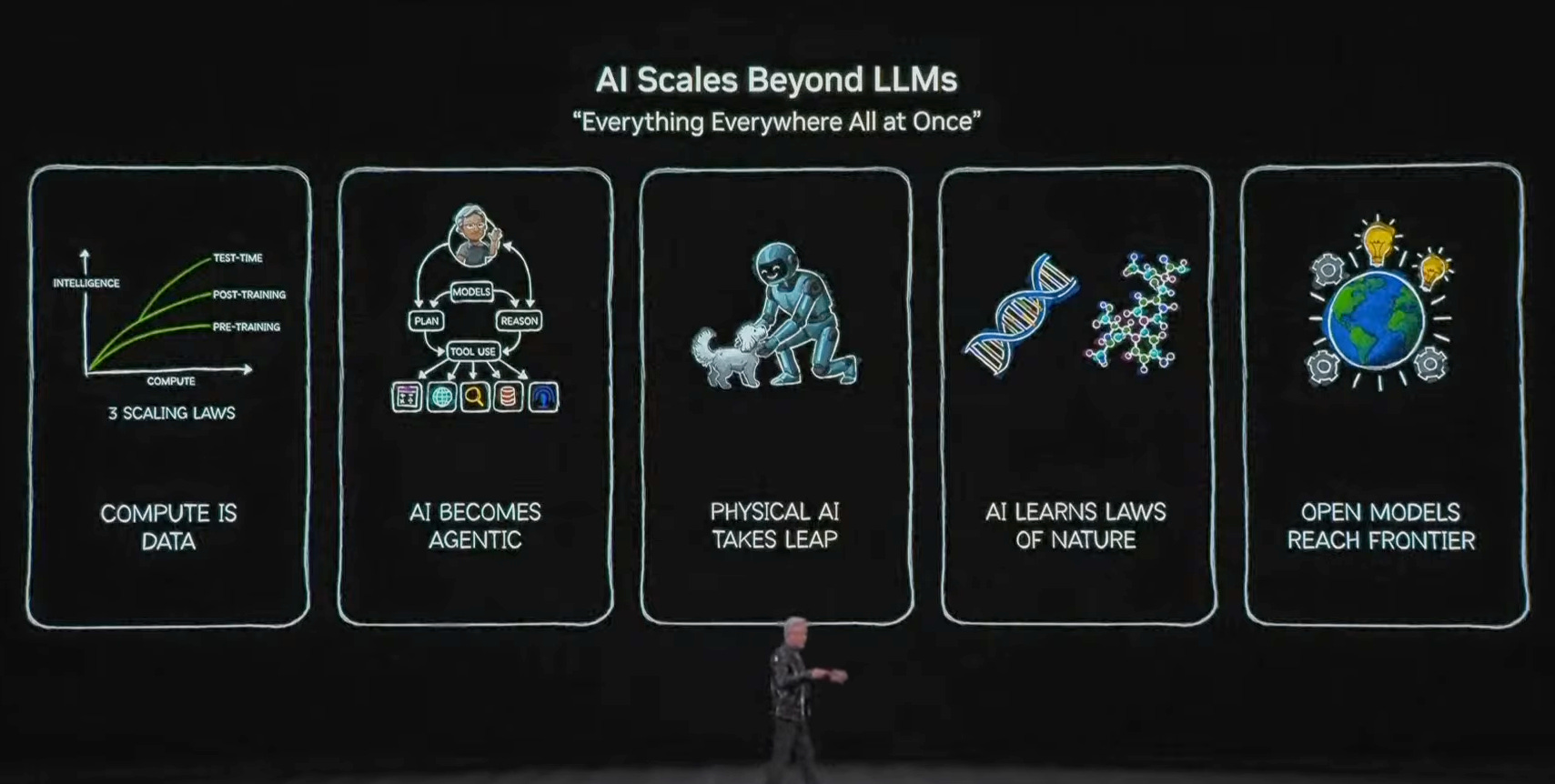
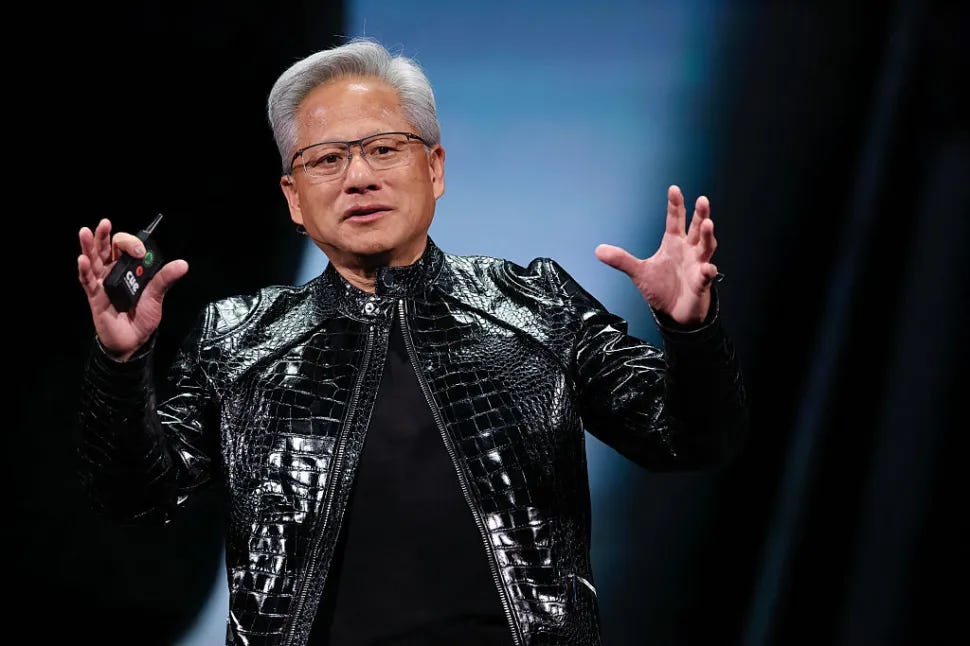
This week I listened to this talk by Jensen Huang, (arguably?) the most influential man in the planet within AI infrastructure.
It had me thinking for a few nights; it’s truly one of the clearest articulations I’ve seen of what the AI industrial revolution that’s about to trigger will look like.
Really, this wasn’t a product keynote, it wasn’t a GPU roadmap, and it most definitely wasn’t about chatbots
Its about the new reality were approaching as AI starts moving beyond software and into the physical word
AI discussion today is still stuck at the model layer:
which model is smarter?
which benchmark improved?
which startup raised?
This may have been relevant back during the first wave of AI, when intelligence lived in text, images, and code. Jensen’s claim is that this is a local maximum.
The real economy doesn’t run on prompts.
There’s a world outside of Silicon Valley. The real economy still runs on factories, vehicles, power grids, labs, supply chains… in other words, any systems governed by physics, causality, and risk.
If AI is going to transform those systems, it can’t just generate answers. It has to reason, simulate outcomes, and act safely in the real world.
Sponsor The AI Opportunity & get your product in front of thousands of founders worldwide? Reach out to g@guillermoflor.com
Trending right now: How Base44 was bootstrapped and sold for $80M in 9 months
That’s what this talk is about.
It explains why AI is shifting from models → systems, why compute stops being just infrastructure and starts becoming experience, and why simulation becomes the new data flywheel once observation alone isn’t enough.
If Jensen is right, the next wave of AI won’t be defined by apps. It’ll be defined by how intelligence gets embedded into the physical world.
The people who understand this early will have an unfair advantage when building for the next 20 years.
Inside: The Ultimate 8 Ideas Powering the AI Industrial Revolution 🔥
Why AI must move beyond models
Why open models win in the real world
NVIDIA’s bet: owning the full AI stack
When agents become the application
Simulation as the missing computer
Alpha Mayo: physical AI becomes real
Why autonomy scales beyond cars
AI as industrial infrastructure (the moat)
1. “We MUST move AI beyond the models”